
A Comprehensive Guide to AI and IoT in Structural Health Monitoring


Introduction to AI and IoT in Structural Health Monitoring
The integration of Artificial Intelligence (AI) and the Internet of Things (IoT) is revolutionizing the field of Structural Health Monitoring (SHM). These technologies provide innovative solutions for real-time monitoring and maintenance of infrastructure, enhancing safety and efficiency. This comprehensive guide explores the synergy between AI and IoT in SHM and its transformative impact.

The Role of IoT in Structural Health Monitoring
IoT plays a crucial role in SHM by enabling the collection and transmission of data from various sensors embedded within structures. These sensors can monitor parameters such as vibration, temperature, and strain, providing critical insights into the health of a structure. The data collected is used to predict potential failures, ensuring timely maintenance and reducing risks.
By leveraging IoT, engineers can implement a network of wireless sensors that continuously monitor structural conditions. This approach allows for the real-time detection of anomalies and potential damage, leading to proactive maintenance strategies.
AI: Enhancing Data Analysis and Predictive Maintenance
AI complements IoT by processing and analyzing the vast amounts of data collected by IoT devices. Machine learning algorithms can identify patterns and predict structural failures before they occur. This predictive capability is essential for extending the lifespan of infrastructure and ensuring public safety.

AI-driven analytics enable more accurate forecasting of maintenance needs, reducing unnecessary inspections and repairs. This leads to significant cost savings and enhances the efficiency of structural health management.
Case Studies and Real-World Applications
Several industries have successfully implemented AI and IoT in SHM, demonstrating its practical benefits. For example, in the civil engineering sector, these technologies are used to monitor bridges and skyscrapers, ensuring their integrity and safety. The transportation industry also employs SHM systems to maintain railway tracks and highways.
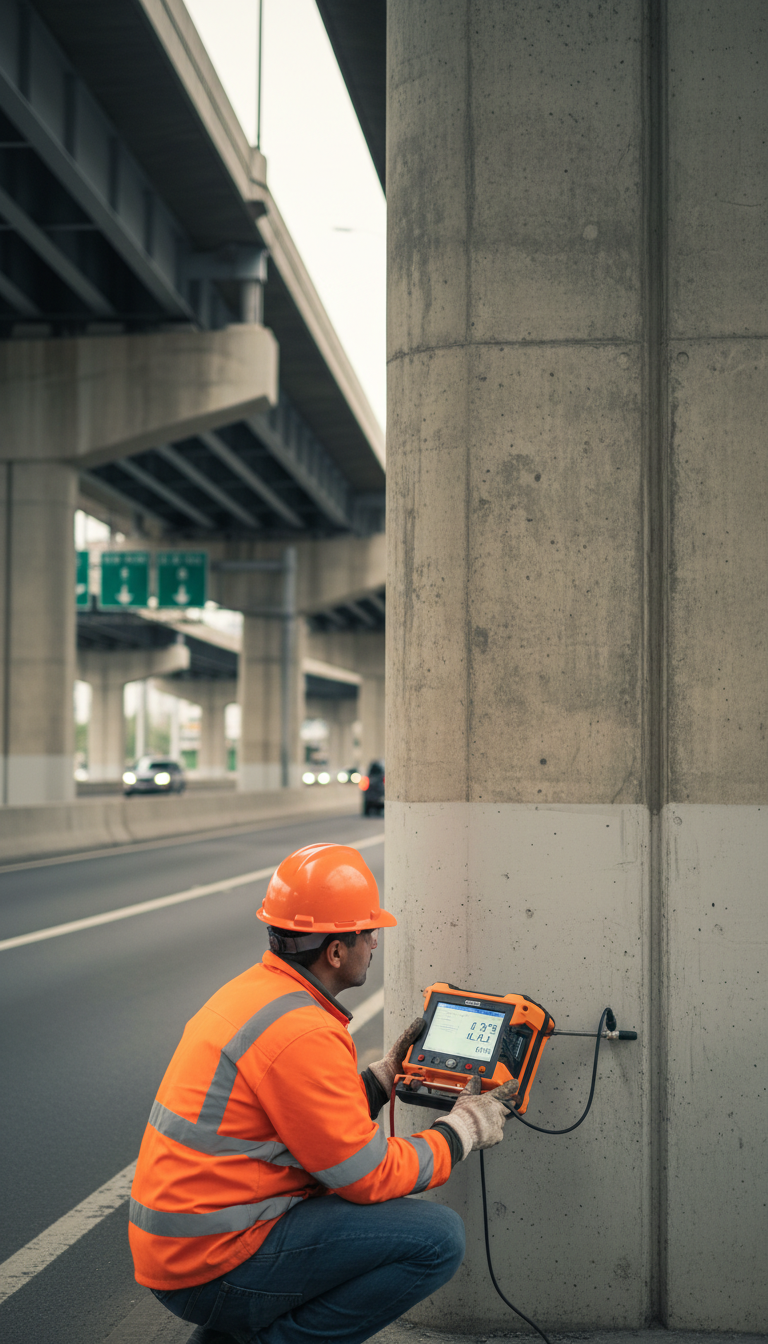
In each case, the integration of AI and IoT not only improves safety but also optimizes resource allocation, making infrastructure management more sustainable and cost-effective.
Challenges and Future Directions
Despite the numerous advantages, the adoption of AI and IoT in SHM faces challenges such as data privacy concerns, the need for robust cybersecurity measures, and the integration of new technologies with existing systems. Addressing these challenges is crucial for maximizing the benefits of these technologies.
Looking ahead, advancements in AI and IoT are expected to further enhance SHM capabilities. The development of more sophisticated algorithms and sensors will provide deeper insights into structural health, paving the way for smarter, more resilient infrastructure.
Conclusion
The combination of AI and IoT in Structural Health Monitoring is a game-changer for infrastructure management. By enabling real-time monitoring and predictive maintenance, these technologies ensure the safety, efficiency, and longevity of critical structures. As technology continues to evolve, the potential for AI and IoT in SHM will only grow, offering exciting possibilities for the future of infrastructure management.